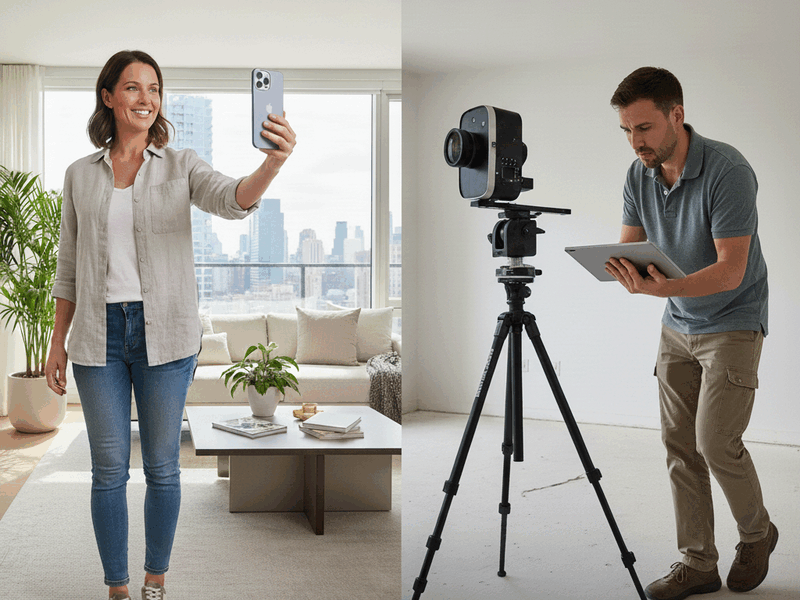
Are Video Tours better than 360° Tours in 2026?
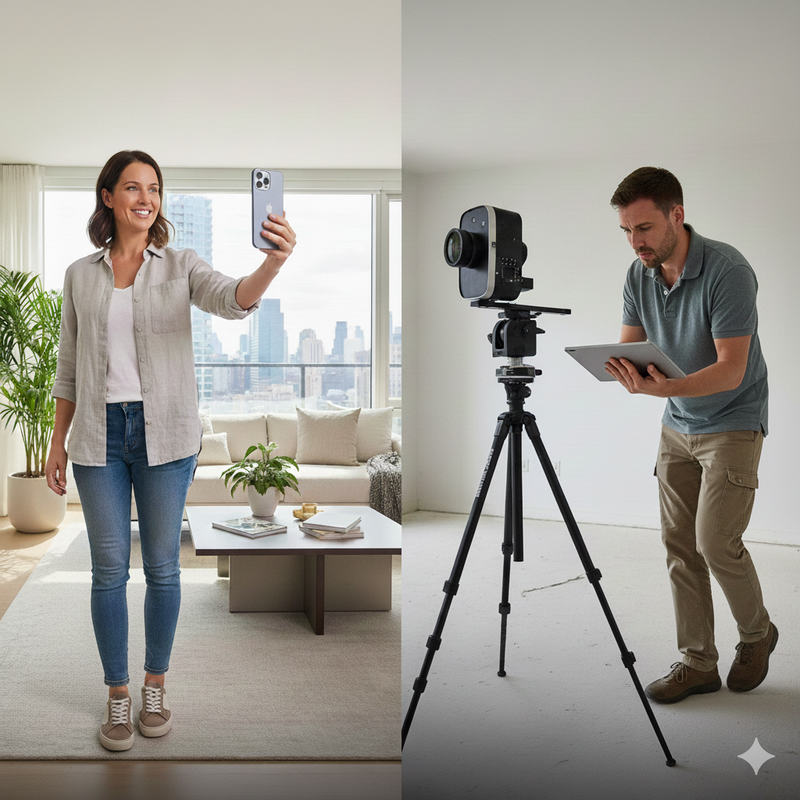
Whenever we pitch Viewit to customers, sometimes, there is a slight pause as to what we do exactly. Are we hosting 360° tours of listings, where users can virtually tour a property with a touch of a finger or click of a mouse or are we hosting videos? In order to come to a well-thought-out conclusion on video vs 360°, let’s start by reviewing the history of digital twin technology.
Back in 2011, a Silicon Valley startup called Matterport focused on turning real-world spaces into immersive digital models. Using early depth-sensing cameras and computer vision, the founders built technology that captured and stitched 3D environments into cohesive digital experiences. This basically meant you could move around a space digitally, similar to how you move around a 3D video game, but in real 3D environments. This was revolutionary – users could now spend hours within spaces they liked without having to visit them – a problem we at Viewit are obsessed with.
How are digital twins created?
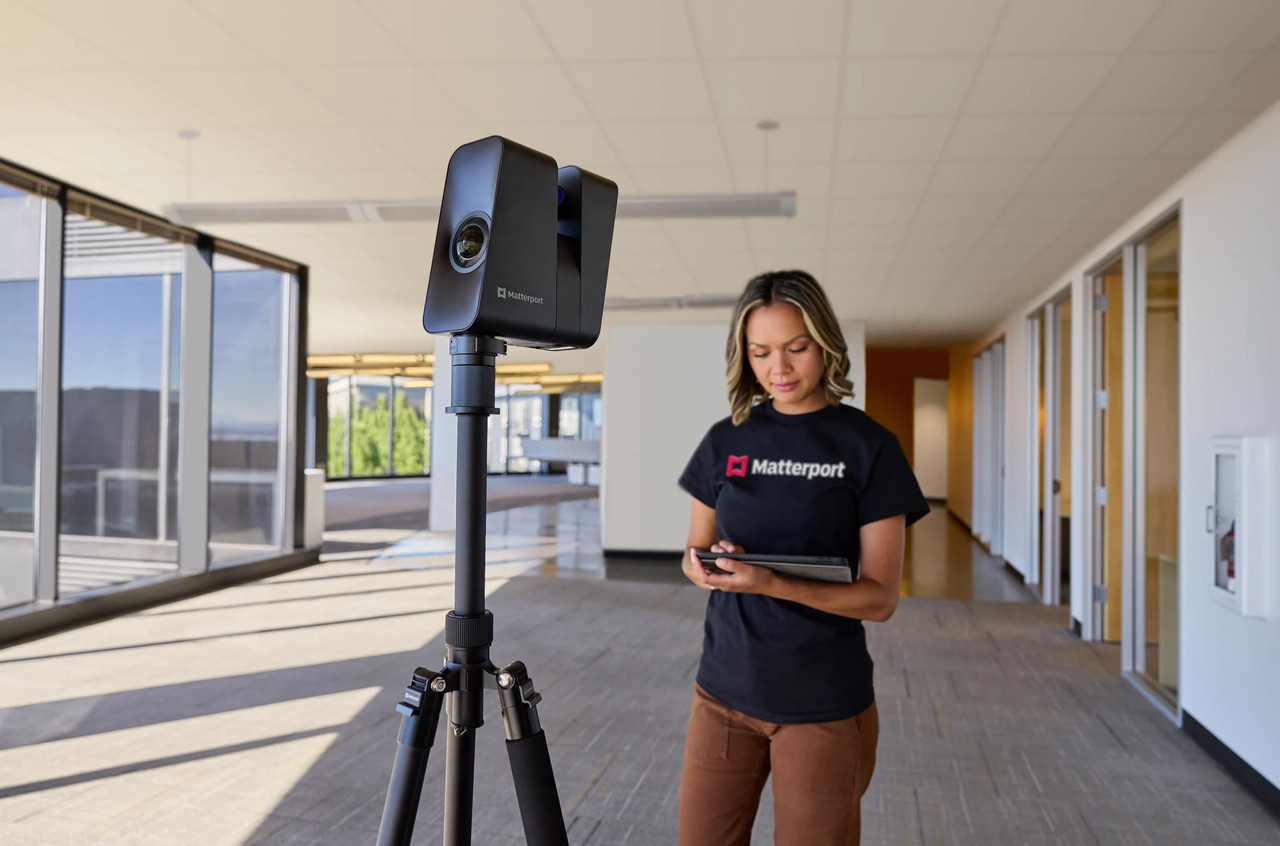
Matterport works by taking hundreds of pictures of a room from different angles—front, corners, center—then automatically stitching them together like a puzzle. It also measures depth at every point, turning those stitched images into a fully accurate 3D model.
Their proprietary software then uploads this data to Matterport’s cloud, where AI stitches, renders, and builds a navigable 3D digital twin.1 Processing, hosting, and delivery all require the user to have an active paid Matterport subscription, as their platform is closed which means you can only use their cloud, hardware and software.
The final product is a Matterport link which you can embed on your site as a link that plays the 3D tour – similar to how you embed YouTube links. The end result is great, you can see the whole property, explore each room in depth and gauge door and room sizes, ceiling heights, light sources, furniture spacing and the distance between two points.
While the end result has tremendous value to home buyers and tenants, the problem is it takes a minimum of 3.5 to 6 hours to complete this process. The second; the camera, tripod and subscription will cost you upwards of $3,650. The third, the learning curve is steep, you will require some training to use this tech. Sure, they have come out with smaller and cheaper cameras but this reduces the cost, time, and learning curve by 20% max. Until this technology is not on everyone’s phone and ubiquitous, it will not become mainstream. The fourth issue, not everyone likes or understands digital twin tech. This is obviously a subjective matter; some people prefer it but others find it clunky, confusing, slow to render and a heavy strain on their device. So what’s the alternative?
Why Video and Why Now?

Video is the alternative. Sure, video is not as detailed as a 3D digital twin, but a videos tell a story and stories are what humans understand. This is why 90% of internet traffic was video content in 20252. Video drives engagement, emotion and most of all, connects to a wide audience. Whether it’s a walkthrough of a property or an agent talking about their experiences in the market, video continues to dominate internet traffic. Social media video content accounts for 82% of video consumption on the internet3, illustrating the clear dominance of this medium.
Secondly, videos are easy to produce, distribute, and consume. You do not need a fancy camera, a paid subscription or access to AI technology within gated walls. All you need is a decent phone with an internet connection and a property to shoot and a story to tell. This ease of producing, distributing and consuming video has made it easy for everyone to understand.
Third, real estate videos increase inquiries by 403%4, by explaining the dimensions, spacing and lighting of different rooms within a space. At Viewit, we encourage agents to explain the listing as they walk through it, so that users can connect not only with the property, but with the agent because ultimately, people buy from people.
Fourth and final point is that videos allow for a lot of creativity. With editing tools such CapCut and Viewit’s video editor, agents can now add their own touch to videos with minimal effort. Captions, music, transition, hooks, quick breaks and filters all add to the virality of videos and allow users to connect and enjoy these experiences and incentivize agents to produce better and more compelling content.
While both technologies have their merits, we believe that video is the future. 3D experiences have their utility and are the superior technology but video continues to steer the massive steamliner called the internet, and that is what we continue to focus on. Further, these technologies are not mutually exclusive, they can compliment each other. If an agent has a super hot listing, they should utilise both in order to entice their audience.
At Viewit, we are always looking at what’s next in creating immersive, compelling content for a new generation of property buyers and tenants, which is why we constantly ask ourselves these questions. As always, keep checking in for the latest news and reviews on real estate technology in the region and beyond!
- https://matterport.com/learn/digital-twin/real-estate?srsltid=AfmBOoq1LRnK6tKIiuLEsKjWWLJ4aB8w__9JdBAmwkUA_tj5EvjdBFBZ ↩︎
- https://chapla.bg/video-marketing-statistics-in-2025-a-comprehensive-analysis-for-brands/ ↩︎
- https://www.webinarsoftware.org/video-marketing-statistics/ ↩︎
- https://www.taboola.com/marketing-hub/real-estate-marketing-trends/ ↩︎
Subscribe to our newsletter to stay up to date about the A to Zs of Dubai!